
LOGIN
Biomass Innovation Design Hub - Andalucia
Hub Description
Andalusia is an exceptional region from the point of view of territorial and population within the EU, with 87.597,7 km2, Andalusia surface is similar to that of states like Austria, Portugal, Czech Republic and Hungary and its population amount is very close to that of countries like Austria and Sweden.
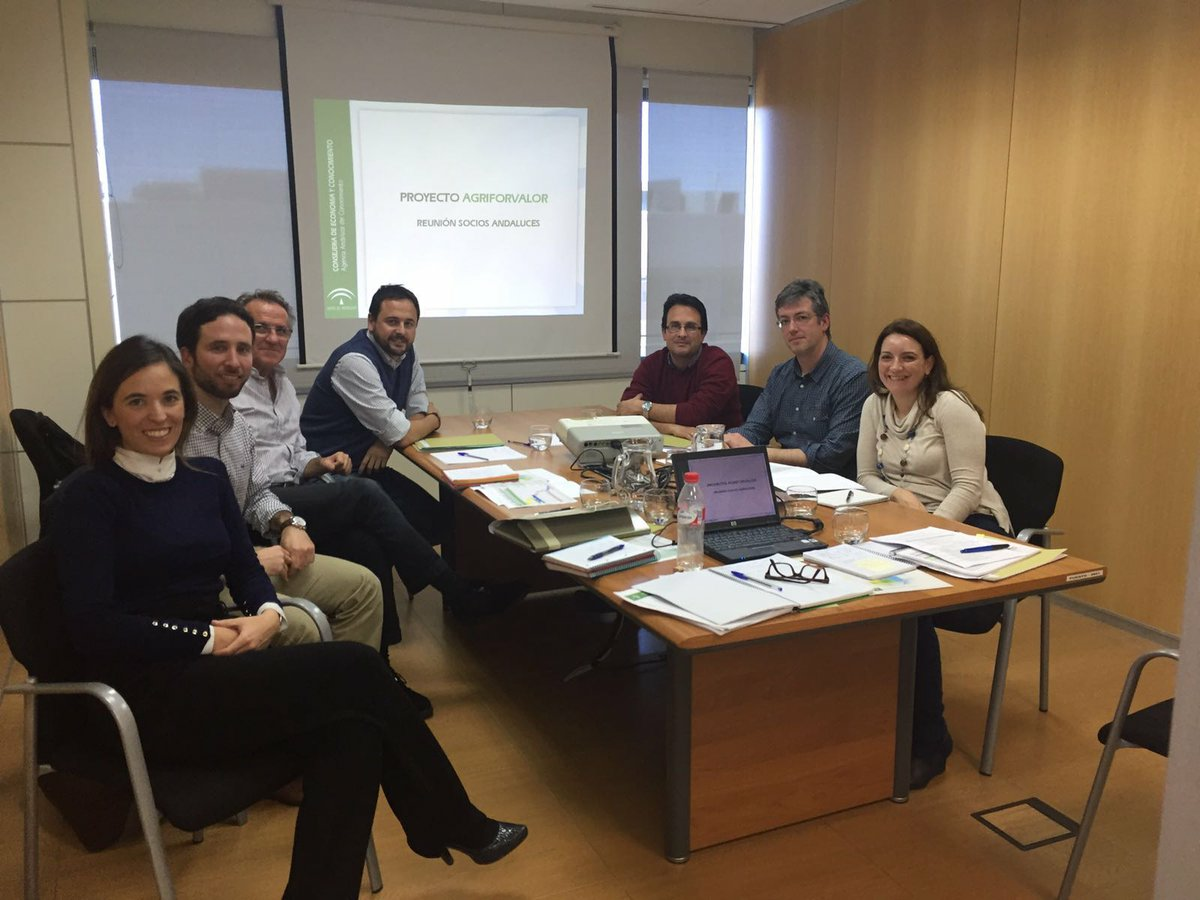
Hub manager: Agencia Andaluza del Conocimiento (AAC)
The AAC actively promotes knowledge transfer involving companies, research groups and Technology Centers at regional, national and European level.
The services include:
- Finding the best Andalusian partner for a technology transfer process
- Accessing to a regional catalogue of technology offers and requests
- Connecting with companies and researchers ready to develop an international collaboration
- Assessing the best and newest R&D and innovation investing lines in Andalusia
- Reporting on Andalusian R&D and innovation technology status
AAC is WP 2 Leader and Central Hub representative for Andalusia. Its vast experience in technology transfer in Andalusia, its connections to the Andalusian Knowledge and Innovation System, its know-how in innovation support services to companies predestined AAC to be coordinator for idea generation and involved in all the activities concerning the innovation design hub in Andalusia (WP2-4).
Hub partner: Federación Andaluza de Empresas Cooperativas Agrarias (CoopsAgroAND)
Role in the Hub
Task-leader for farmers/forest needs survey in the hubs (WP2) and important role for establishing networks, know-how and innovation transfer as well as for dissemination and communication activities among the agricultural sector. Representing the interest and potential of waste application of AGRO stakeholders in the proposal and networking to farmers
Hub partner: Asociación de Empresas Forestales y Paisajísticas de Andalucía (AAEF)
MAIN ACTIVITY PILLARS OF AAEF:
- Promoting professionalization of the forestry sector from the companies affiliated through training, innovation, technological development and implementation of all quality standards, environmental health and safety.
- Represent the interests of the forestry sector politics, regional, national and European sustainable development and social forestry.
- Participate in regional, national and European cooperation in the field of environmental protection.
- Dissemination of information on forestry and landscaping.
Role in the Hub
Communication activities coordinator within the Hub
Important role for establishing networks, know-how and innovation transfer as well as for dissemination and communication activities among the forestry sector. Representing the interest and potential of waste application of FOREST stakeholders in the proposal and networking to foresters.
Hub partner: GABINETE DE INICIATIVAS EUROPEAS, S.A. (GIESA)
Bioeconomy projects. The company has broad experience in the design, construction and operation of organic waste to value projects. In this sense, the company is responsible for the design, promotion and management of the first industrial anaerobic digestion plant in Andalusia, which converts 65,000 metric tons per year of agricultural waste (pig slurry, manure, olive mill wastes...) into 1,600 kWh of biogas under an innovative business model.
Innovation Brokering Services.. The close relationship of GIESA with stakeholders from different sectors (farmers; agri-food industries; research and technology centres; etc.) has permitted GIESA to play a key role as Innovation Broker, identifying, assessing and refining innovative ideas, creating linkages between stakeholders and promoting new bioenergy projects. Furthermore, GIESA counts with broad experience in R&D and innovation project management, having managed projects with a budget of up to 27 million euro and consortiums of up to 14 partners.
Role in the Hub
Participation as bio industry, representing the bio industry sector in Andalusia. Specific role in communicating and disseminating bio industry concepts. GIESA will actively participate in the implementation of the project through its participation in workshops and events, through the provision of specific knowledge and support for the implementation of biomass innovation design hubs, through its contribution in communication & dissemination activities, etc. Furthermore, the role of GIESA as Innovation Broker and its close relationship with farmers, foresters, bioenergy-related industries, etc. will permit to foster the replication and transfer of the results of the project to other key stakeholders.
Members of the regional Steering Committee
(www.agenciaagrariaypesquera.es)
(www.ceia3.es)
(www.corporaciontecnologica.com)
Agriculture and forestry sector in Andalusia
Andalusia is the largest autonomous region in Spain (87.268 km2), being larger than Belgium, the Netherlands and Luxembourg together (76.657 km2).
The utilized agricultural area registered in 2010 was 4.402.760 hectares that accounts for the 50,3% of the Andalusian territory.
Agricultural sector is a key pillar of the Andalusian economy, not only for its contribution to employment in the region, but also for its contribution to the cohesion and territorial balance, its ability to set population and an element revitalizing rural areas.
Andalusia contributes to about a 17% of the Spanish forest area which, in turn, accounts for the 16% of the forest area in the European Union, being Spain the second greatest forest area.
Forestry sector has an increasing influence on rural development through entrepreneurship regarding sustainable use of forests and other activities related to the active management of the natural environment.
Biomass situation agro/forest sectors
In Andalusia, there is a direct relationship between agriculture and forestry sector in relation to the exploitation of agricultural and forest biomass, whose purpose is to advance in improving the degree of energy self-sufficiency in the region.
Andalusia produces approximately 4.208.599 tonnes per year of vegetable wastes and by-products, equivalent to 56% of the Spanish volume. Agricultural waste is mainly used for animal feed, incorporated into the soil or burned.
Forest products (with a potential total of 136.4 ktep/year), the 57% of its potential as biomass (77,83 ktep/year) corresponds to Quercus species products, the 28% to eucalyptus, the 19% to conifers and the 5% to poplars.
Current facilities for the valorisation of agricultural waste in Andalusia are (basic data obtained from the VALUE project):
- 9 composting plants specific for agricultural waste.
- 14 plants for the valorisation of urban waste, where agricultural wastes with characteristics equivalent to urban waste are also valorised.
- 11 plants for the generation of energy from olive mill solid wastes.
- 1 anaerobic digestion plant specifically designed for the valorisation of agricultural waste and by-products.
Hub biomass sidestream usage and potential
According to the Andalusian Energy Agency, the potential of biomass in Andalusia amounts to 3,958 ktoe. Whereas the primary energy consumption in Andalusia in 2011 was 19,053.3 ktoe, this potential represents 20% of energy needs in Andalusia. Their development, in addition to environmental benefits and greater energy independence are achieved as a result of the substitution of fossil fuels, positive impact on employment generation in the producing, processing and logistics sector. Likewise, the use of forest biomass as energy resources represents an opportunity for the set up of sustainable forest management that contributes to rural development by improving the masses, economic diversification, employment creation, increased profitability of the vegetation and the reduction of emissions of greenhouse gases.
The energy contribution of olive may be increased only if the pruning and leaf mill are properly valued, because pomace, orujillo and olive stone are already being almost entirely used on energy projects and there is very little margin for commissioning up of new projects from these biomasses.
In particular, Spain is growing consumption of pellets, multiplying by four since 2010 and reaching the amount of 380.000 tons in 2013. In terms of future prospects, subject matter experts estimate that 10% of final energy consumption in the EU in 2020 will come from biomass, while domestic consumption pellets in 2030 will be double that recorded in 2010. The uses of the industrial pellet also increase, surpassing the domestic pellet.
Hub Contact
Cristina Cabeza
E-mail:
Tel: +34 955045811