
LOGIN
News
Case Study: Biowert Industrie GmbH
The green biorefinery
Published on 20-01-2017 16:17:47 by AGRIFORVALOR
 Biowert Industrie GmbH based in Switzerland and Germany operates an industrial green biorefinery focused on the valorisation of grass silage. Local farmers supply grass to the biorefinery plant for processing to a range of sustainably produced products.
Founded in 2005, Biowert Industrie GmbH based in Switzerland and Germany operates an industrial green biorefinery focused on the valorisation of grass silage (1). Local farmers supply grass to the biorefinery plant for processing to a range of sustainably produced products with high added value. The main focus of the process is the production of high quality cellulose fibres from grass for a range of biobased product applications (2). Biowert which literally translates to Bio-value, generates local rural direct and indirect jobs and creates new potential for adding value for local farmers. The biogas part of the process also provides a waste management solution for the local community.
In the Biowert green biorefinery, grass is fractionated mechanically into a solid press cake and a protein rich juice. This separation is a mechanical process using specially designed presses without any application of chemicals or organic solvents and over several steps the process yields fibre of high purity. The required process energy is provided by a biogas plant onsite which runs on a combination of process residues from the biorefinery, food waste from the local community, and cattle slurry from neighbouring farms. The combination of high CO2 absorption in grass and the relative CO2 neutrality of the process with closed loop principles for energy and water results in minimal environmental burden. Ensiling the grass ensures a year round feedstock source, not achievable were the grass to be processed fresh.
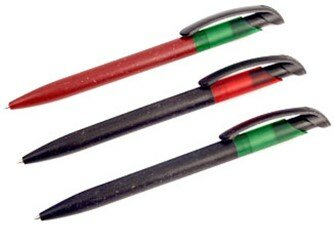
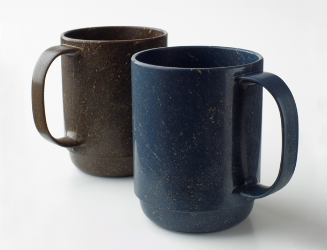
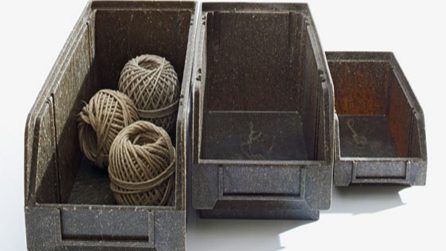
Biowert produces 2500t per year of high quality cellulose fibres which can be used for a variety of applications (2), most notably AgriPlastBW a biocomposite material suitable for injection moulding or extrusion applications. This composite material reduces the demand for oil in manufacturing of plastic products by up to 75 percent. Depending on the function, the material consists of 40 to 75% cellulose fibres and only 25 to 60% of plastics such as polypropylene or polyethylene (1). AgriPlastBW can be coloured with any colour pigments and can easily be processed on conventional extruders and injection moulding machines into a variety of products including ball-point pens, terrace flooring, even injection moulded mugs. The final products are up to 20% lighter than equivalent products made from pure plastics (1). AgriCellBW, a blow-in insulation material for wall, roof and floor is also produced from the fibre component material. This allows a second income alternative for farming families, as they can get a second job during winter months mounting the insulation material (3). From the liquid residue of mechanical processing, AgriProtBW, a protein rich base material for the production of flavours and cosmetic products is produced. AgriProtBW can also be used as a GMO-free animal feed for chicken and pigs. The digestate produced through the biogas is high in essential nutrients and can be sold to market as fertilizer, or re-applied to land by the grass suppliers thus ensuring the circularity of the process.

James Gaffey, IT Tralee
References
1. IBIB (2012) International Business Directory for Innovative Bio-based Plastics and Composites (online) available from
http://www.bioplasticsmagazine.com/bioplasticsmagazine-wAssets/docs/iBIB2012-2013.pdf (19 Jan 2017)
2. Wang, L. (2014)Sustainable Bioenergy Production. 1st edn. Bocan Raton : CRC Press.
3. Assessment of BIOrefinery concepts and the implications for agricultural and forestry POLicy (2008) Report with the assessment results concerning the impact of biorefineries on rural development, employment and environment (online) available from http://www.biorefinery.nl/fileadmin/biopol/user/documents/PublicDeliverables/BIOPOL_D_2_2_3_-_Final_120609.pdf (19 Jan 2017)